What Are Cannabinoids?
Cannabinoids are a group of chemical compounds that are defined by their ability to bond with cannabinoid receptors in the human endocannabinoid system.
We classify cannabinoids into three main groups:
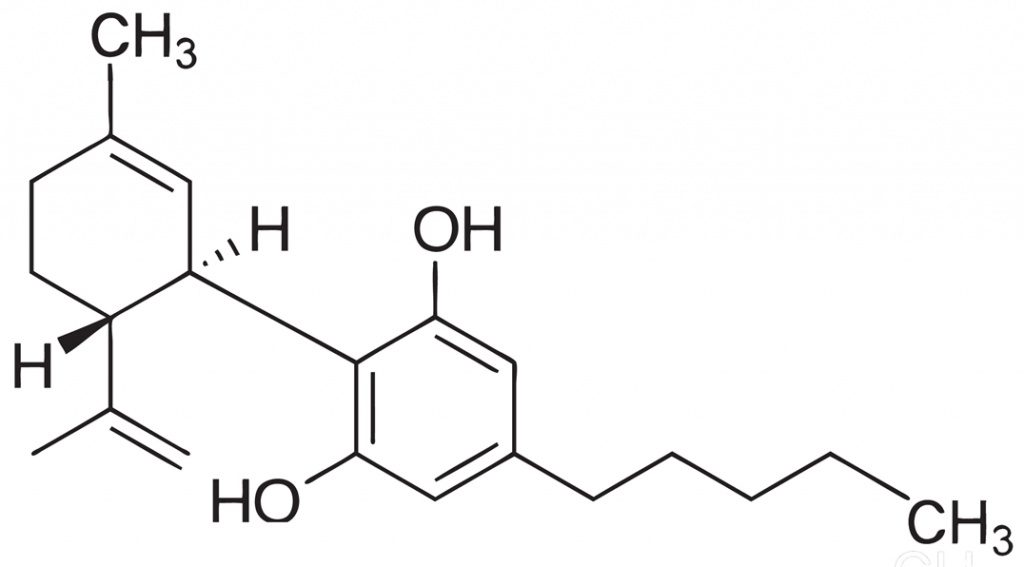
- Endocannabinoids – cannabinoids produced by every animal (including humans) inside their body. Currently, we know of 5 different endocannabinoids but the two most important ones are anandamide (N-arachidonoylethanolamine or ANA) and 2-arachidonoylglycerol (2-AG).
- Phytocannabinoids – cannabinoids produced by certain plants (cannabis sativa L). There are more than 70 known phytocannabinoids, the most popular ones being THC and CBD.
- Synthetic cannabinoids – these cannabinoids are created synthetically (in a lab), and can’t be found anywhere in nature. One example is dronabinol (Δ9-THC synthetic).
Read our detailed guide on different cannabinoids to learn more.
What Is CBD Good For, Health-Wise?
While doctors and scientists are still deep in CBD research, some studies are available that confirm that CBD can be used to treat a host of different symptoms. That said, CBD is far from a cure-all – it would be foolish to think that its therapeutic properties are a substitute for anything your doctor recommends. At best, you can use CBD to supplement your therapy, and that only after you have consulted with your primary healthcare provider.
- CBD for pain reduction – because of its anti-inflammatory properties, CBD can be useful in treating certain systemic and chronic inflammations, such as arthritis. Several studies also confirm its effectiveness in treating neuropathic pain, which is the most difficult pain to treat and manage.
- CBD for cancer treatment – a couple of preclinical trials suggest that CBD has antitumoral properties, which is good news for cancer patients. This specific study has found that cannabinoids (along with CBD) can actually increase the effectiveness of conventional chemotherapy drugs.
- CBD for anxiety – CBD is efficient at altering undesirable mental states, such as depression and anxiety. Although it does not affect the CB1 receptors the same as THC, it does interact with them, which means that it accesses the central nervous system. Researchers have found that large doses of CBD can have the same effect as some rapid-acting antidepressants and anxiolytics, increasing the levels of serotonin and decreasing the levels of stress hormones.
- CBD for seizures – one of the most frequently asked questions about CBD health benefits concerns epileptic seizures. This topic got a lot of press lately one the FDA approved a CBD medication for two difficult forms of the disease. While more research is needed, it’s true that CBD can reduce certain epileptic attacks by more than 40% or, in some cases, completely stop them (Dravet Syndrome).
- CBD for oxidative stress – CBD is a strong antioxidant, which means that it can, potentially, slow down age-related molecular damage and the diseases resulting from that.
 The Kind Kart